


According to the World Health Organization, cardiovascular disease is the leading global cause of death, killing an estimated 17.9 million people each year.1 The American College of Cardiology recently updated cholesterol management guidelines to include screenings for Lipoprotein(a), also known as, Lp(a), an independent risk factor for heart disease that isn’t measured in standard cholesterol tests, and Apolipoprotein B (ApoB), which can identify residual risk after LDL is optimized.2
Screenings for Lipoprotein(a) and Apolipoprotein B can provide insights into heart disease that standard cholesterol tests do not measure.2
In this blog, we will be discussing why understanding these Lipoprotein fractions can give providers a better understanding of cardiovascular health.
What are Lipoproteins?
Lipoproteins are round particles made of fat and proteins that travel in the bloodstream to cells throughout the body. Our bodies make different types of proteins – high levels of some Lipoproteins can be harmful to your body, while others provide heart-protective benefits.
Lipoproteins are classified into two different categories, good and bad. High-density lipoprotein (HDL) is the good cholesterol that reduces your risk of cardiovascular disease, while low-density Lipoprotein (LDL) is the bad cholesterol that increases your risk of coronary artery disease, heart attacks, and stroke.3
Because high cholesterol does not often cause symptoms, the best way to identify any issues with cholesterol is through blood testing. This is why testing is so important, but it’s just as important to understand the limitations of traditional lipid metrics.
Moving Beyond LDL
Studies show that traditional reliance on LDL testing as the primary determinant of cardiovascular risk is increasingly recognized as a clinical deficiency. Measuring the mass of cholesterol contained within the LDL particles (LDL-C) does not account for the actual number of LDL particles or their toxicity. Some evidence has found that while a significant percentage of patients do not meet LDL-C targets, clinicians often fail to modify or intensify treatment accordingly.4
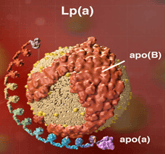 Advanced lipid testing has been suggested by some experts to identify patients with substantial residual risk for more aggressive targeting of lifestyle and pharmacologic therapies. It measures subpopulation of lipoproteins and apolipoproteins which include lipoprotein(a) (Lp[a]), apolipoprotein A-I (apo A-I), apolipoprotein B (apo B), along with measures of lipoprotein particle composition such as LDL and HDL particle number and particle size.5
Clinical Implications
With this shifted perspective on what leads to cardiovascular risk, it’s important to understand how this impacts providers and physicians as they are working with their patients. Even with all of the evidence-based guidelines and expert recommendations regarding lipid assays, many countries have not adopted routine Lp(a) testing in clinical practice. The practice of Lp(a) detection and result interpretation varies greatly even among specialists managing atherosclerotic cardiovascular diseases (ASCVD).6
Because standard lipid profiles may not completely represent the cholesterol-related risk of things like myocardial infarction, clinicians may need to consider advanced lipid testing to further assess their cardiovascular risk. These advanced lipid profiles measure Lp(a), apo(B), the number of LDL particles, and the size of LDL and HDL particles.7
|
|
LDL-C |
ApoB |
Lp(a) |
|
What it reflects |
Cholesterol mass |
Particle number |
Genetic LDL subtype |
|
Primary question answered |
“How much cholesterol?” |
“How many particles?” |
“Is there inherited extra risk?” |
|
Guideline status |
Primary target |
Increasingly recommended |
Once-in-lifetime screening currently, with potential for expanded use |
At a macro level, the CDC operates a network of laboratories called the Cholesterol Reference Method Laboratory Network (CRMLN) to ensure that reference measurements are comparable across network members and provider reference measurement capacity for assessing and certifying the analytical performance lipid tests across the world.8
Laboratories can get certified so that users of tests for HDL-C, LDL-C, total cholesterol and total glycerides produce sufficiently accurate and precise measurement results, allowing healthcare providers to compare their patient’s results to current clinical decision points to consistently evaluate their health status.8
How SEKISUI Diagnostics can help
As cardiovascular risk assessment evolves, the laboratories that adapt their approach to lipoprotein testing will play a critical role in enabling earlier, more precise intervention.
SEKISUI Diagnostics has a series of cardiovascular assays to ensure clinical labs are equipped to provide the answers physicians need to ensure the health of their patients.
References
- Cardiovascular diseases, World Health Organization
- The lower the better, for longer time: new cholesterol guidelines are a “paradigm shift” in preventing heart disease, National Academy of Medicine
- Lipoproteins, Cleveland Clinic
- Re-evaluating Cardiovascular Risk: A Narrative Review Challenging the Cholesterol Hypothesis and Identifying Modern Dietary Drivers, National Library of Medicine
- The Role of Advanced Lipid Testing in the Prediction of Cardiovascular Disease, National Library of Medicine
- Barriers and strategies in detection and management of elevated Lipoprotein(a) in hospital: A pre-implementation qualitative study of cardiology healthcare professionals, National Library of Medicine
- Advanced Lipid Testing: A Deeper Insight Into Cardiometabolic Health, Institute for Functional Medicine
- Improving Performance – CRMLN, Centers for Disease Control
Share Article